Wednesday, October 22, 2014

The Persian Brno (Berno) vz. 24 Rifle

Greetings! I am returned from my long absence!  I offer my deepest apologies to you, my dear audience. During my time away, I was able to enjoy a year of adjunct teaching at Ivy Tech Community College, continued working my awful regular job, and returned to study English at Indiana State University.  To put it briefly, I have been busy. And now that my excuses and apologies are out of the way, we can get to talking about the actual good stuff.

Today I want to talk about the Berno (Brno) aka The Persian Mauser. This is an article I have wanted to do for some time. However, every time I have attempted to write it, I can never find any good, scholarly articles on this subject. The best information I can find is from Wikipedia, a personal website called Ali Parsa, and various gun collecting websites.. I know the risks involved in citing such sources, but in my research, I have found the same information repeated on numerous sites, therefore, some general statements can be made on the history of the Berno. So, instead of a proper article on the history of the Brno, I will do a quick blurb about the most interesting aspects of the rifle.


Photo from http://www.empirearms.com


The vz.24 rifle was produced in Czechoslovakia based upon the Mauser 98 design (1).  The rifle was a very popular design, highly regarded for its accuracy. When the Germans occupied Czechoslovakia during World War II, this rifle was produced for the usage of the German military. After the war, it was exported, and found favor with the military of Reza Shah Pahlavi's Iran (2). Called the Berno in Iran, it gained its name from the "Brünn, or Brno, as the city is called in the Czech language. The rifles made in Brno, the Czechoslovakian model...had the word Brno imprinted on them" (3).  

Photo from http://public.fotki.com/ptrthgr8/mausers/persian/


This Berno displays the Pahlavi stamp, a standard on all Bernos issued to the military.

Photo from the Military Surplus Collector's Forums of a Berno 98/22

The range-finder features Persian Nasta'liq numerals, which are also employed for the serial numbers on the various parts of the weapon. 

While the Berno saw long service in the Iranian military, it was eventually replaced in the 70s by more modern weaponry within the armed forces. However, many private individuals within Iran, such as tribesmen, farmers, etc. still prized their Bernos (4). The Berno became the weapon of choice for the Iranian Revolutionaries in the 70s, with sharpshooters favoring the Berno above other modern rifles. Due to this popularity of the Berno and the prominent role it played in the revolution, it features in Friday sermons in Iran, with religious leaders keeping the rifle close to their sides. As Ali Parsa states:
Besides the rebels, the Islamic government too had a use for Brno: It was, and is, used in official Friday prayer ceremonies. The speaker is required to have 'the weapon of the day' by his side, according to the tradition of the Prophet (he apparently used a sword). The most likely reason for its use in such ceremonies is that it is long enough for the speaker to hold it like a walking stick while he is standing and preaching. The Mauser brothers would have been happy to hear that their rifle would be considered a 'weapon of the day' a century later. (5)
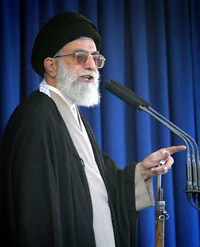

Photo from Ali Parsa


I hope that this article has shed some light on the scattered, but fascinating history of the Persian Mauser. While sources for its history can be dubious at times, some conclusions on its history can be made by piecing together the material available. There is no doubt that it is weapon that carries reverence inside and outside of Iran, not only for its long history, but for the role it has played in shaping that history, for ill and nill. The rifle itself is truly a masterpiece of craftsmanship and weapon design, and for collectors of older military rifles, it is a prized piece for their collections.

1.) Parsa, Ali. "A Piece of History: Brno, the Persian Mauser". Ali Parsa Personal Website. 10/22/2014. http://www.aliparsa.com/brno/brno.html

2.) Ibid.

3.) Ibid.

4.) Carducci, Bernardino. "98/29 Persian Mauser". Gunscollecting.com. 10/22/2014. http://www.gunscollecting.com/english/long-guns/9829-persian-mauser/

5.) Parsa, Ali. "A Piece of History: Brno, the Persian Mauser". Ali Parsa Personal Website. 10/22/2014. http://www.aliparsa.com/brno/brno.html


Friday, June 14, 2013

Central Eurasia and the Internet: A Love/Hate relationship

I am going to shift gears here with Baby Got Bactria for a moment and take a look at what is going on in Central Eurasia today. One need not search for very long to find news of new laws limiting journalistic powers, penalizing certain forms of free speech, and the blacklisting certain websites in the former Soviet satellite states. This is also seen in Iran and over and down into the Middle East states. Yet even with this suspicion of the internet and its influence, there are also examples of Central Eurasian countries benefiting from its use.  For example, there is a project in Kyrgyzstan to collect a photo archive, accessible to everyone, so people may learn about Kyrgyzstan's history.  There is also the matter of e-commerce in Kazakhstan, an area of potentially incredible growth in the Kazakh economy, yet Kazakhstan cannot seem to keep itself from regulating and restricting information on the internet. 

With these juxtaposing interests of freedom and authority active in the region, I have asked Dr. Joshua I. James of University College Dublin, Ireland and the website Cybercrime Technologies to share his thoughts on the issues facing Central Eurasia in Cyberspace.

BGB: I've read recently that Azerbaijan is considering a new law implementing stiff penalties for profanity and libel on the internet. Such legislation is being decried as a way to curb government critics. While attempts to legislate the internet seem to be in vogue right now, do you find these to be ultimately useless laws, or do you find them to be power-grabs by governments?

JJ: "I think Azerbaijan, like many other countries, are currently going through a period of realization that they don’t understand what this “Internet” thing actually is in terms of the role their government(s) will play in the future. Their natural reaction, as we have seen, is to attempt to impose a local law to something that is really much bigger than themselves. In most cases I don’t think they really care what the law is, as long as they look like they are doing something about the “problem” (locally). Because of the nature of the Internet, a lack of understanding, and a lack of willingness to do research, the majority of laws that are being passed right now are much, much too general, allowing many opportunities for abuse. We’ve seen abuses because of the general scope of laws like the U.S. Computer Fraud and Abuse Act, and the laws that (arguably) less developed democracies are proposing are normally much more general than that – very old - law.
I don’t believe every horrible law that is proposed is meant to be malicious, but is just the product of a person who is ignorant of the area trying to do something good without actually understanding the problem. That being said, with the Internet playing a key role in the Arab Spring, I think that was somewhat a wake-up call to some governments, or organizations within governments. I think many politicians saw a chance to sell cybersecurity as a National Security issue (which security experts have been yelling for years), and gain political power in doing so.
I believe cyber law is mostly, as you say, a power-grab right now. My primary reason for believing this is because countries that are extremely concerned with online profanity are rarely willing to work on the problem at a global level. They want to keep control, or even further oppress, their physical space in digital reality, not actually contribute to fighting a real problem. This tells me that they might actually be concerned with profanity, but they are also looking to abuse the power overly general laws will afford them. Do I think these laws are useless? No... I think they’re terrifying.
However, from what I’ve seen around the world, the people in most countries don’t really care what laws are passed, as long as 1) they don’t have to pay more for the Internet and 2) they think they are not being watched/filtered (I’m over-generalizing). Basically, trying to get people to pay attention to what is happening is impossible until it is far too late. With an attitude like that, power-grabs based around national cyber security are actually pretty effective."

BGB: Also, in relation to the previous question, do you think that hacktivism has become something of a great equalizer, pitting the "little guy" against "big governments"? Or do you feel that this hacktivism is fueling the fires of government calls for restriction of online freedoms and even access?

JJ: "I am quite mixed about hacktivism (again how, exactly, do we define hacktivism). I’m very much an advocate of openness, but not maliciousness. I find some ‘attacks’ where I might agree with the attacker’s sentiment, but completely disagree with the attack they used, or how data or information was used afterwards. In an article about legal protest and distributed denial of service, I tried to make an argument FOR legal civil protest using DDoS, but ultimately couldn’t find a way to justify it. Right now hacktivism, to me, seems more like bullying than communication. However, the bigger problem is that in most cases it is impossible to tell if something is hacktivism or malicious exploitation by criminals. For example, if a bank looses the personal records of 1,000,000 people, it is very hard to say in one case “ah, well they are just standing up for what they believe in – they will delete the data”, and in another “they stole the records to sell on the black market”. One, I can probably agree with, the other should probably be a crime. However, all we know is that the records were stolen, and not how the records will be used. And since hacktivists are usually relatively anonymous, should we actually trust they are using stolen data as they claim? If stolen data negatively affects the people AND the corporations, I don’t think I can agree with it. During protests we should be fighting to make things better for the people. If the people become collateral damage, then the protest is not worth it.
But in those cases, I am referring towards civil complains, not complains against the government. In civil cases, there should be some way to legally protest online. This means that the techniques that are used should be able to be differentiated from malicious hackers. Extreme force is not always necessary to get your point across.
In the case of hacktivism against governments, I think online attacks are becoming somewhat an equalizer. But I also think it is being abused. It is very easy to launch online attacks, and everyone has something to complain about. If hacktivism is always rather extreme, and is used whether it is an amendment violation or a parking violation, then the overall impact will be lessened. This reminds me of physical protests in Korea. Groups here protest different causes literally every day. The result of protesting every day is that the average person becomes desensitized, and quits caring about your cause. This makes groups more radical to get their point across, then people start hating these groups for being insane.
I think in terms of government activism there should be some sort of legalized channel of anonymous online protest, and when that fails, then other – potentially illegal – measures may be necessary in extreme cases. The problem now is that if everyone can launch an online protest, again, how do you differentiate protest from malicious attack when you cant identify the person attacking you. Keep in mind that governments and businesses are pretty much constantly under malicious attack. It would be best if there was a way to organize and control the use of extreme protest methods online, but centralized management is impossible. And you will always have a crazy person that wants to protest pickles on his hamburger by taking down a government website. To these organizations, hacktivism looks just like another malicious attack coming in.
I think in both cases the problem is attribution. Hacktivists would need to differentiate themselves from malicious hackers with some form of identification, and since hacktivsts use illegal methods to get their point across, they don’t want to identify themselves. The result, then, is that organizations can’t tell the difference, so they call for more online restrictions. Again, communication is key, and most hacktivist methods I have seen so far are not really about communication, but showing that they are stronger. And I think intimidation methods hurt everyone in the long run."


Dr. Joshua I. James is a research fellow at UCD Ireland.  He is currently in South Korea working with the South Korean police on cybercrime and investigative methods in digital forensic research.  

Wednesday, May 22, 2013

The Comitatus and Thor

The comitatus in the movie Thor, consisting of (R to L): Thor, Volstagg, Fandral, Sif, Hogun, and Loki.


The concept of the Comitatus is an aspect of martial life that spread across the steppe from China all the way to Europe. Warlike societies, from various Eurasian nomadic groups to the Rus (Vikings), were attested to having their own versions of the comitatus. But what is this comitatus, you ask?  Allow me to elaborate.

The comitatus is discussed at length in Christopher Beckwith's book Empires of the Silk Road. It is a personal guard corps loyal to the leader above all else, including family, government ministers, etc. Beckwith describes the comitatus as "a war band of [the lord's] friends sworn to defend him to the death."(1)  This death not only meant potential death in battle, but also ritual suicide upon the death of the lord. A comitatus could number in the hundreds or thousands, however the core of the comitatus consisted of a small number of the lord's closest personal friends and allies.(2) The comitatus could also include the lord's male relatives or even sons, as Chinggis Khan's sons were among his trusted generals.

There was good incentive for joining a comitatus. The lord was bound to his guardsmen to reward them richly for their service. Gifts of war booty, silks, jewels gold, titles and honors were granted to the comitatus members. Khubilai Khan's twelve thousand bodyguards were gifted robes of silk and gold, adorned with precious gems. This gifting of robes was attested by Marco Polo and said to have happened thirteen times a year, incurring immense cost to Khubilai Khan. "The cost of these robes, to the number of 156,000 in all, amounts to a quantity of treasure that is almost past computation".(3)  However, the cost of disloyalty for members of the comitatus was also steep. Punishment was death, with all property gained in life forfeited.
"According to a story in the Secret History, a comitatus warrior abandoned his defeated Kereit lord, who could no longer provide him with good food, gilt clothing, and high status, and he went to serve the victor - Chinggis Khan - instead. Chinggis rightly declared that the man had abandoned his liege lord and could not be trusted to become a companion; he ordered him to be executed." (4)
Now, what does all of this have to do with the movie Thor? Quite a bit, actually. Upon viewing the movie, I was struck by how aspects of the interactions among Thor, Loki, Sif, Fandral, Volstagg, and Hogun resembled the operations of the comitatus system. There is an argument that could be made that this is the comitatus of Thor, or this could be the comitatus of Odin, in which case Thor and Loki would be a part of their father's comitatus. If the former interpretation is taken, there is eviden to support it. It was not uncommon for princes to start their own comitatus while their lord was alive. This is the case for al-Ma'mun and al-Mu'tasim, two Abbasid Caliphs who maintained a comitatus. Al-Mu'tasim formed his comitatus well before the death of his predecessor, al-Ma'mun.(5)

Looking at the movie, there is much evidence when following the theory that Sif, Fandral, Volstagg, and Hogun are Thor's personal comitatus. They wear fine armor, wield incredible weapons, dine with the royal family and live in the palace. They accompany Thor on his journeys, even when they know their actions will be met with disapproval by Odin. When Thor is cast out of Asgard, they seek to intercede on his behalf with Odin, and later, Loki. When these paths fail, they go to Earth themselves to rescue Thor. When fighting the Destroyer in New Mexico, Sif declares she will die a warrior's death when Thor asks her to flee to safety. She only defers to Thor's will when he informs her he has a plan to defeat the Destroyer. Upon their return to Asgard, they are treated as heroes with a grand celebratory feast hosted by Odin and his wife, Frigga.

There is also some evidence that Thor and Loki, along with the others, could constitute the comitatus of Odin. The King and Queen are the patrons of all of them, granting them all of their weapons, wealth, status, and power. Perhaps the most interesting evidence is when Odin cast Thor from Asgard for disobedience. This is an action not unlike executing or banishing a disloyal comitatus member. Stripped of his land, powers, and titles, Thor is exiled to Earth while Loki becomes the king of Asgard. Also interesting is how Loki chose to die (or later, it is revealed he has been transported to another part of the universe) rather than live in his brother's shadow and live as a disloyal outcast of the royal family.

Of course, this is not a perfect example of a comitatus. Thor was not executed for his disobedience, nor were his comitatus companions punished for following Thor into the Jotunheim.  However, the elements are there, and it makes complete sense to incorporate the comitatus, which was an attested aspect of Viking life, to the world of Asgard and its inhabitants.


1. Beckwith, Christopher I. Empires of the Silk Road: A History of Central Eurasia from the Bronze Age to the Present. (Princeton University Press: 2009) pg.12.

2. Ibid, 13

3. Latham Richard trans. Marco Polo: The Travels ( Penguin: 1958) pg. 138, 140-141, quoted in Christopher I. Beckwith. Empires of the Silk Road: A History of Central Eurasia from the Bronze Age to the Present. (Princeton University Press: 2009) pg.22.

4. Allsen, Thomas T. Commodity and Exchange in the Mongol Empire: A Cultural History of Islamic Textiles. (Cambridge: 1997) pg. 53 quoted in Christopher I. Beckwith. Empires of the Silk Road: A History of Central Eurasia from the Bronze Age to the Present. (Princeton University Press: 2009) pg.17.

5. Beckwith, Christopher I. Empires of the Silk Road: A History of Central Eurasia from the Bronze Age to the Present. (Princeton University Press: 2009) pg. 25.

Friday, April 12, 2013

Snake and Bake

While visiting the St. Louis Zoo on a family vacation, I noticed three snake species in the Zoo's Herpetarium that were particularly relevant to my interests.  They were as follows:

The Armenian Viper

Information about the Armenian Viper
The Armenian Viper is, according to the St. Louis Zoo website, a venomous snake native to Armenia and its surrounding areas.  They are found in mountainous areas, where they feed on insects, rodents, and lizards.  They share dens with other vipers in the winter where they hibernate during the cold months.  An interesting fact about these vipers that the Zoo's website relates is that they give birth to live young rather than laying eggs. (1)

Iranian Mountain Viper

Information on the Iranian Mountain Viper
According to the St. Louis Zoo's information card, the Iranian Mountain Viper is found only in Zanjan Mountain range, near the Caspian Sea, at elevations of 8,000 feet.  The Viper is vulernable due to over-collection for antivenom production. (2)

The Caucasus Viper

Information on the Caucasus Viper

The Caucasus Viper, according to the St. Louis Zoo website, is a vulnerable species of viper found in the mountainous areas of Turkey and Russia.  Because of political unrest, over-collection, and habitat destruction, conservation efforts for the snake have been frustrated in this area of the world.  Little is known about this snake due to the harsh climate that it inhabits. (3)

These are but a few of the many Eurasian species present at the zoo. I would encourage all my readers to visit the St. Louis Zoo's Center for Conservation in Western Asia website and check out their efforts to save various Central Eurasian species from the brink of extinction.


1.  St. Louis Zoo: Armenian Viper.  http://www.stlzoo.org/animals/abouttheanimals/reptiles/snakes/armenianviper/. Date Accessed: 04/12/2013

2.  St. Louis Zoo information card.  St. Louis Zoo Herpetarium.

3.  St. Louis Zoo: Caucasus Viper.  http://www.stlzoo.org/animals/abouttheanimals/reptiles/snakes/caucasusviper/. Date Accessed: 04/12/2013

Tuesday, March 5, 2013

Educational Filler

While I am lacking in updates with my own research, I thought I might share with my readers two of my favorite stories from Al-Mas'udi's The Meadows of Gold.  First, though, I should share a little information about the author.

Abu al-Ḥasan ʿAlī ibn al-Ḥusayn ibn ʿAlī al-Masʿūdī was born around the year 890 AD in Baghdad. He was an Arab Historian and Geographer who traveled extensively, collecting information on local ethnic and religions groups, customs, laws, histories, natural sciences, geography, etc.  Of the thirty-six books that Al-Mas'udi wrote, only two are extant:  The aforementioned Meadows of Gold and The Book of Admonition.  Both books represent attempts at compiling a global history, lending to Al-Mas'udi's nickname "The Arab Herodotus".  While such works, based on interviews with individuals and contemporary sources and reports from other travelers, can have issues with accuracy, or even flights of absolute fancy, there are also incredibly accurate reports in The Meadows of Gold, such as the report of Huang Ch'ao's Rebellion in China, the reports on trade goods, and descriptions of ancient sites, such as the pyramids and Persepolis. Al-Mas'udi's contributions to scholarship are invaluable sources on the world of the late Abbasid Caliphate and give an insight to how scholars of his time period regarded their world and its history. (1)

In this first entry I am about to share, Al-Mas'udi is relating information on the famous city of Iram (Irem), whom many of you may have heard of in relation to the Chthulhu Mythos by H.P Lovecraft.  Mysterious, legendary desert cities were breeding romantic stories even in Al-Mas'udi's day.  Notice how in this entry, Al-Mas'udi turns a critical eye to the story of Iram, dissecting the fact from the fiction, and noting the work of others on this same subject, and condemning the storytellers of the day for blending the lines between reality and fantasy to curry favor with political and religious leaders.  I edited out Al-Mas'udi's description of The Thousand and One Nights because, honestly, I became tired of typing. If anyone desires more information on the subject of that classic of literature, please Google it.  I believe it is also offered as a free Kindle download from Amazon.

25. Iram of the Columns

The great temple known as Jayrun in the city of Damascus was built by Jayrun ibn Sa'd of the tribe 'Ad who supplied the marble columns which support it. This monument is identical to the Iram of the Columns mentioned in the Qur'an.


A different story is told on the authority of Ka'b al-Akhbar. When he came to the court of Mu'awiya ibn abu Sufyan, Mu'awiya asked him about Iram. Ka'b described a wonderful building covered with gold and silver and cemented with saffron and musk. He said that an Arab searching for his two lost camels would resdiscover Iram, and he described the man. Then, turning to the assembly, he cried out: "There's the man I just told you about!"

And indeed, this Arab had found Iram while looking for his lost camels. So Mu'awiya rewarded Ka'b's truthfulness and reliability. If the story related on Ka'b's authority were true, it would be a good thing; unfortunately it is suspect, both for the chain of transmission and for other reasons. It must be considered the invention of the professional storytellers.

The site of Iram of the Columns, and indeed its very existence, has given rise to much discussion. None of the experts in tradition at the court of Mu'awiya, men who knew most about the history of the Arabs and other ancient peoples, accepted the legend of Iram, with the exception of 'Ubayd ibn Sharya, who gave Mu'awiya much information on the battles and events of the past. The work of this 'Ubayd is available to the public and well known. 

Many learned men believe stories of this sort to be apocryphal: lies invented by the storytellers to gain favour with kings. It is these men who gave their contemporaries the idea of preserving these tales and repeating them in their turn. 

Among these collections are works which have come down to us in translations from Persian, Indian or Greek originals. we have already mentioned the way they were composed. One such book is entitled Hazar Efsaneh, The Thousand Tales, for that is what efsaneh means in Persian. This book is known to the public as The Thounsand and One Nights...A similar book is called Farzi u Simas, which includes information on the kings and viziers of India. Another is the Book of Sindbad, and there are other compilations of the same kind. (2)

This next entry relates a story told to Al-Mas'udi about a certain disastrous excavation of an ancient Egyptian burial site. It's almost charming the way Al-Mas'udi says that the wonders and treasures of the ancient Egyptians are so highly sought after "even today", with today being his contemporary era. It  is fun and fascinating to know that then, as now, the allure of Egyptian treasure has brought archaeologists and explorers to Egypt for over a thousand years after the death of our author!  Even in Al-Mas'udi's day, as in the time of Lord Carnarvon and Howard Carter opening King Tutankhamen's Tomb, Pharaoh's curses were feared and ancient sites were excavated cautiously. The fruits of these excavations (see also: grave robbing) give a description of Egyptian burial sites that contain astonishing continuity with the contents of Tutankhamen's tomb, which is the most intact Egyptian royal tomb ever excavated. I don't know about anyone else reading this, but it makes my heart ache a little bit when Al-Mas'udi describes the excavators busting open statues for their precious contents.  Hang on, dear readers, because this story is a long one, but a good one.  

32. Excavations

I have questioned the most learned Copts of Upper Egypt and other provinces on the meaning of the word 'pharaoh', but no one has been able to tell me anything about it, for this name does not exist in their language. Perhaps originally it was the general title of all their kings and then the language changed, just as Pahlavi, the language of ancient Iran, has become Persian, classical Greek has evolved into modern Byzantine, and Himyaritic and many other tongues have changed. You will find in our previous works strange tales of the treasures and monuments of Egypt and the wealth which both its kings and other nations who ruled this land buried in the earth and which are sought even today.
Among the strange anecdotes on this subject is one told by Yahya ibn Bukayr. While 'Abd al-'Aziz ibn Marqan [governor of Egypt, 685-705] was governing Egypt in the name of his brother 'Abd al-Malik, he was visited by a man who wished to give him some information. 'Abd al-'Aziz asked him what it was about, and the mane said, 'Under such and such a dome there is a great treasure.' 'Abd al-'Aziz said, 'What evidence do you have of that?'

'A pavement of different-coloured marbles will appear to us not very far down. Digging farther, we have to remove a door made of bronze, above which is a golden column. On top of the column there is a golden cock; his eyes are two rubies worth more than the revenues of the entire world. His wings are encrusted with rubies and emeralds, and his claws grip plates of gold on top of the column.'
'Abd al-'Aziz immediately commended him to be given several thousand dinars to pay the wages of the labourers hired for the excavations and all the other necessary work.

There was a large tell at the site and the men opened a vast trench in the earth, in which the marble slabs which the man had mentioned were brought to light, thus sharpening the greed of 'Abd al-'Aziz, who immediately made over to him new sums of money and incresed the number of workmen.
As they went on digging, they uncovered the head of the cock. His appearance was heralded by a light, swift and intense as lightning, which flashed, shining and brilliant from his ruby eyes. Then the wings and then the claws of the cock appeared. Next, they found, all about the column, a colonnade made of different kinds of stone and marble. It was composed of arches and, above the arched doors, niches with statues and figures of people in bronze and gold. Then came sarcophagi of stone whose lids were battened down and enclosed in nets, locked with rods of gold.

'Abd al-'Aziz ib Marwan came on horseback to visit the scene of the excavations and look at the discoveries. One of those present, less patient, set foot on the steps of a staircase cast in bronze which led down to the finds. When he set foot on the fourth step, two enormous swords sprang out to the left and right of the staircase, meeting at the point where the man stood and slicing him to pieces. His body rolled to the bottom of the staircase. When a part of the corpse hit a certain step, the column shook, the cock gave a strange whistling cry, which was heard at a great distance, and flapped its wings. Terrifying sounds caused by a variety of devices and instruments were heard from beneath him. As soon as an object fell on the steps or only touched them, all who were present slid to the bottom of the excavation. The labourers engaged in digging and moving the earth, those who were supervising and organizing the work and those overseeing the workmen - some two thousand in all - perished to a man.
'
Abd al-'Aziz was seized with terror and cried, 'Here are ruins of the most marvellous kind to which all access is forbidden! We seek refuge in God from the evil therein!' Then he ordered that earth from the excavations should be flung onto the bodies of the victims and that the place should be their tomb.

Some people, interested in excavations and such discoveries, are very eager to dig mounds in order to hunt for the treasures and precious things which the kings and people of Egypt had long ago hidden in the bosom of the earth, found in a book written in ancient characters a description of a place, only a few cubits from the pyramids mentioned above, which promised them a rich treasure. They told the ruler, the Ikhshid Muhammad ibn Tughj, who gave them permission to excavate and to use all means necessary to reach the aim of their search.

They opened a deep trench and eventually came to vaults, catacombs and hollowed blocks of stone cut into the rock. Inside stood statues. There were coated with a varnish designed to prevent them rotting or wearing away. The figures were of all different kinds: old men, youths, women and children. Their eyes were made of precious stones, such as rubies, emeralds, turquoise and topaz, and some of them had faces made of silver or gold.

After having broken open several of these statues, it became clear that the housed fragments of bone and bodies crumbling into dust. Beside each one was a kind of jar like an amphora of emerald and marble containing the same varnish as had been used upon the corpses lying in their wooden coffers. The jars containing the remains of this substance, which was made of many ingredients, mixed and pounded, had no odour, but when it was tested in a fire it gave off an agreeable aroma different from any other perfume.

Each of the wooden chests had precisely the shape of the body it enclosed, and they varied according to the rank, age and appearance of the dead. In front of each chest was a statue in white or green marble, which was apparently one of the idols that the Egyptians worshipped. Each of these statues bore a different inscription, which no one, of any religion, could decipher. Several learned men maintained that this script disappeared in Egypt 4,000 years ago. All of which at least proves that the inhabitants of the country in antiquity were neither Jews nor Christians.

The excavations took place in the year 328/939 and led to no discoveries beyond these figures. From the ancient masters of Egypt up until Ahmad ibn Tulun [ruler of Egypt, 878-84] and indeed the present year, 332/944, strange circumstances have led to a series of discoveries of buried objects: money, jewels, treasures and hoards, hidden in tombs. We have already discussed them in our preceding works and in our writings already mentioned. (3)

A note on formatting:  The paragraphs are formatted this way because blogger will not let me use tabs to indicate a new paragraph.  Also, reading huge blocks of text becomes painful for my eyes.

Citations

(1) Mas'udi. From The Meadows of Gold. trans. Paul Lunde and Caroline Stone. (New York: Penguin   Books. 2007.), 1-2

(2) Ibid., 44-46

(3) Ibid., 53-57


Thursday, January 10, 2013

What Are You Taklamakan About?

I must confess:  I haven't really been thinking all that much about Bactria lately.  Bactria, along with a great many other important things, has taken a backseat to the holidays, family, and work.  However, I have been thinking recently about Xuanzang, the famous Buddhist pilgrim of the 7th century, who recorded a wonderful snapshot of Buddhist Balkh on the eve of the Islamic Conquest of Bactria.  

In particular, I have been considering Xuanzang's journey into the Gobi and Taklamakan Deserts early in his travels.  The Gobi is a fairly well known desert by name and location, but perhaps not as well known is the Taklamakan Desert (Taklamakan, as explained by Dr. Anya King, is known to mean "you go in but you don't come out"), found in and around the Tarim Basin.

The Gobi Desert and the Taklamakan Desert.

A political map showing the Gobi and the Taklamakan Deserts.

Xuanzang's journey along the Silk Routes, the major highways for travel of that day, is an excellent account of the conditions travelers faced on the roads.  It was necessary for the monk to have a guide and a horse, of which he had both, though his guide was old and his horse was a skinny mare long past her prime.  The importance of vetting a guide becomes evident as well, since Xuanzang's guide tried to kill him in his sleep.  However, the guide left Xuanzang alone in the desert, and the monk made his way to a Chinese desert outpost, from which he entered the heart of the Gobi Desert.  The dangers of traveling the open desert soon become apparent to the monk.  He questioned things he was seeing, knowing mirages could lead travelers astray.  He encountered the bones of unlucky men and beasts in the desert.  He lost his water supply at one point, and, according to his hagiographer Hui-Li, was only saved through the divine protection of Guan Yin, a Bodhisattva that Xuanzang prayed to when he felt he was in danger.  Xuanzang also encountered bandits on numerous occasions in his travels, as the routes on the periphery of the empires, kingdoms, city-states, etc. were prone to raiding from bands of highwaymen.  Weather and political situations could also prove hazardous to travelers, a unstable governments lead to reduced security along the roads.

The northern Silk Route along the Taklamakan Desert is the route Xuanzang took after arriving at Hami.

There are two routes to choose from when desiring to go around the Tarim Basin and the Taklamakan Desert at its heart.  One is the northern route, along the Tian Shan mountains, were the oasis towns of Turfan, Aksu, and, further west, Kashgar.  On the southern route there were the towns of Khotan, Niya, Loulan, and Dunhuang.  These oasis towns were crucial to safe passage around the Taklamakan, as the desert is a dry, brutal salt basin prone to extreme cold and heat.  The mountains around Tarim Basin give seasonal snowfall and melts, creating rivers that drain into the desert where they disappear due to evaporation upon encountering the dry, arid conditions of the desert.  These seasonal rivers provided the much needed water for agriculture in the oasis towns, producing fruits and other goods to sustain the cities and engage in the trade.  Sericulture (cultivation of silk worms and the production of silk) also made its way to these areas from China along the Silk Routes.  These cities were known for the grand wealth and their strategic importance, and were often the subject of conquests by invading forces, from the successive invasions of the nomadic confederations, to the Chinese, to the Islamic Conquests.  

This map is terrible, but it was the best I could find to show the names, listed in white, of the oasis towns.
As I mentioned earlier, Xuanzang's religious devotions and prayer during his trials in the desert were not an uncommon practice among travelers of that time.  Traveling was a dangerous proposition, and any number of ill fates could befall a caravan.  This is the time of the omens, of consulting wise men, religious figures, and divination for advice on when to leave and what route would be safest to travel.  To show their gratitude, demonstrate piety, and earn a little merit, wealthy merchants and travelers would often commission Buddhist carvings, paintings, manuscripts, or entire Buddhist cave shrines to be constructed.  These sites were important places of pilgrimage and learning for Buddhist monks, who received patronage from local government officials in China as well as wealthy, private individuals.  Two famous Buddhist cave complexes are the ones at Dunhuang (including Mogao and other cave complexes) and the Bezeklik caves at Turfan and Loulan.  These shrines were elaborately decorated, some with portraits of their patrons along with various depictions of Buddhist legends, Bodhisattvas, and various incarnations of the Buddha.  These caves must have been welcome sights of civilization to travelers weary after their long journeys.

Though Xuanzang did not have much use for the caves.  When pressured to stay and visit the caves at Dunhuang by a Buddhist watchman, he insisted he go forward on his pilgrimage to India, even if it meant wandering the desert thirsty, with no guide, a skinny horse and a Bodhisattva.  Such was the devotion of the monk.

Bibliography

Hwui-Li.  The Life of Hiuen-Tsang. trans. Samuel Beal.  Kegan Paul, Trench, Trubner & Co: London. 1911.  Elibron Classics replica edition. 2005.

Wriggins, Sally Hovey. The Silk Road Journey with Xuanzang.  Wrestview Press: Boulder, CO.  2004.

Thursday, November 8, 2012

The Geography of Bactria

Understanding the Silk Routes and the Political Geography of Bactria is a key launching point into this area of study.  The town of Balkh/Bactra was situated at the focal point of two very important routes:  The east/west route to and from China and the north/south route into al-Sind and al-Hind (modern Pakistan and India). 


The Silk Routes around the 1st Century CE. 
This first map shows that there was no one all-encompassing "Silk Road" but, in fact, a network of land and sea routes spanning across Central Eurasia and linking the world, from Europe, to Africa, all the way to India and China.  The land routes traversed various perilous terrains, ranging from scorching desert to frigid and treacherous mountain ranges.  The following map demonstrates the physical geography of the Silk Routes.  Note the expansive size of the desert in the Tarim Basin in Xinjiang/China, the mountain ranges surrounding India, and the general high elevation of the Iranian Plateau, lending to dry conditions therein.


Balkh itself is situated on the Bactrian Plain near the Balkh River, which lent to irrigation and flourishing of agriculture in the area.  Goods produced here, as attested in the Hudud al-Alam (The Regions of the World) include "citrons and sour oranges (turunj-u-naranj), sugar-cane (nay-shakar), and water-lilies (nilufar "lotus")".  The close proximity to the Amu Darya (Oxus) River granted Balkh excellent pasture land for nomadic herders.  Because of its ideal location as a hub of trade routes, Balkh had an extensive market-based economy, trading in manufactured and imported goods.  

This map shows the location of Balkh, marked here as Bactres, near the Amu Darya and Balkh rivers on Bactrian Plain
The compounding effect of devastating invasions, gradual climate change, a shift in trade routes, and an outbreak of malaria lent to the steady decline of Balkh.  However, even in decline the city was respected as a center of learning, a characteristic it maintained since ancient times as a center of Buddhist and, later, Islamic education.  When the capital of Balkh Province was moved to Mazar-e-Sharif, Balkh became a cluster of ruins.  However, many sites indicating the old splendor of the region remain, such as the site of the Green Mosque, built by Timurid conquerors in the 15th century.  As late as 1924-25, four stupas of monumental size were visible, though in a ruinous condition in Balkh.  Interestingly, one of the largest and most elaborate stupas corresponds to the location of the famous Naw Bahar, the grand Buddhist temple attested to in multiple accounts of Balkh.

This map shows the location of modern Balkh Province in Afghanistan.

 
   This map shows Balkh province with the city of Balkh in the middle of the province.


Bibliography

Anonymous. Hudud al-Alam: The Regions of the World. Trans. V. Minorsky ed. C.E. Bosworth. Gibb Memorial Trust: Cambridge. 1982.

de Planhol, X. "BALḴ: i. Geography".  Encyclopedia Iranica Online. http://www.iranicaonline.org/articles/balk-town-and-province

Paul, Jürgen. "Balkh." Encyclopaedia of Islam, THREE . Edited by: Gudrun Krämer, ; Denis Matringe, ;John Nawas and ; Everett Rowson. Brill, 2010. Brill Online. Indiana University Bloomington. 31 December 2010. http://www.brillonline.nl/subscriber/entry?entry=ei3_SIM-23449

World Architecture Map. "The Green Mosque". http://www.worldarchitecturemap.org/buildings/green-mosque-balkh

Maps 1-4 from Wikimedia Commons.  Map 5 from the Ministry of Foreign Affairs of Denmark website.